
Vinyl laminate flooring for kitchen
Vinyl laminate (или LVT — Luxury Vinyl Tile) is a modern floor covering, which combines practicality, durability and aesthetic appeal. For kitchen, where the floor is subject to increased loads, this is one of the most rational choices.
What is vinyl laminate?
This is a multilayer material based on polyvinyl chloride (PVC). Unlike conventional laminate, vinyl laminate flooring for kitchen has no wood base, which makes it completely moisture resistant. Modern quartz vinyl contains mineral particles, increasing its strength.
- Flexible and plastic material
- Full moisture resistance
- High wear resistance
- Variety of designs (a stone, tree, ceramics)
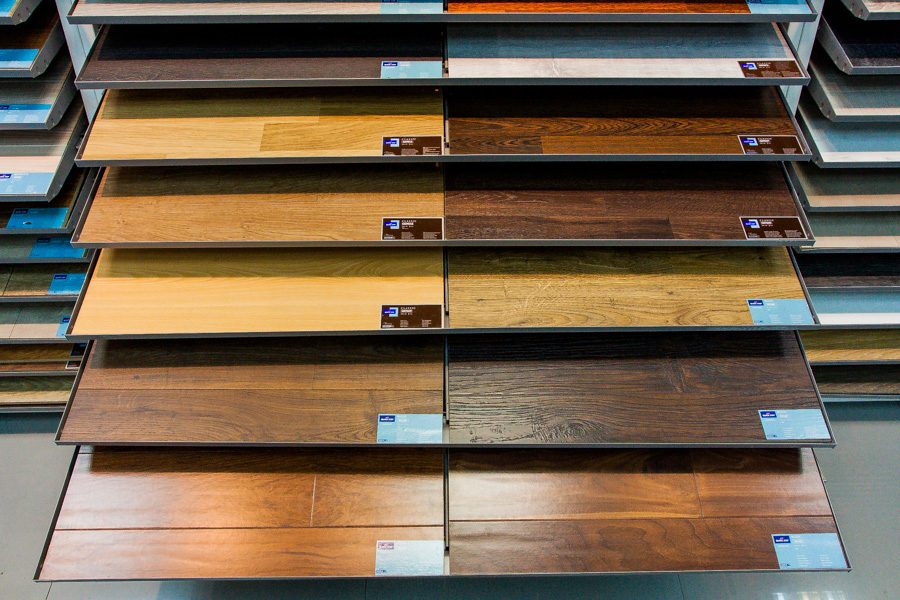
Benefits of vinyl laminate flooring in the kitchen
1. Absolute moisture resistance
This is the main advantage for the kitchen. Vinyl is not afraid of spilled water, frequent wet cleaning and steam. It does not swell or deform, unlike conventional laminate or parquet.
2. Comfort and safety
The coating is warm to the touch and slightly springy underfoot, which reduces the load. It also has anti-slip properties, what's important, when water or oil gets on the floor.
3. Easy maintenance
Regular wet cleaning without aggressive chemicals is sufficient.. Oily stains, tea, coffee can be easily removed using conventional means.
4. Durability and wear resistance
Modern vinyl has a protective wear-resistant layer (to 0,7 mm), which resists scratches from furniture, animal claws and abrasive particles.
5. Versatility of installation
Can be stacked:
- By glue method (tightly fixed to the base)
- By lock method (floating floor, like laminate)
- With self-adhesive backing
Disadvantages and Limitations
1. Sensitivity to point loads
Heavy furniture with thin legs can leave dents. It is recommended to use protective pads.
2. Possibility of damage from sharp objects
Drop of a heavy sharp object (eg, knife) may cause cuts.
3. Demanding requirements for the base
The base must be perfectly level (differences no more 2 mm 2 m), otherwise all irregularities will be visible on the flexible coating.
4. Susceptibility to rubber
Rubber mats or shoe soles may leave dark, hard to remove marks.
5. cost of
High-quality quartz vinyl is more expensive than a good laminate, although cheaper than natural parquet or porcelain stoneware.
Criteria for choosing vinyl laminate for the kitchen
1. Wear resistance class
Choose for the kitchen commercial grade:
- 34-43 class — optimal for residential premises with high loads.
- Protective layer thickness - no less 0,3 mm, it is better 0,5 mm.
2. Plank thickness
- from 2 to 5 mm - the thicker, the more resistant to dents and the warmer the floor.
- Working layer thickness (where is the drawing) — from 1,5 mm.
3. Lock connection type
- Click lock - for floating installation, easy to install and dismantle.
- Lock - requires padding, but often more reliable.
- Moisture-resistant impregnation of the lock - additional protection against moisture.
4. Design and form
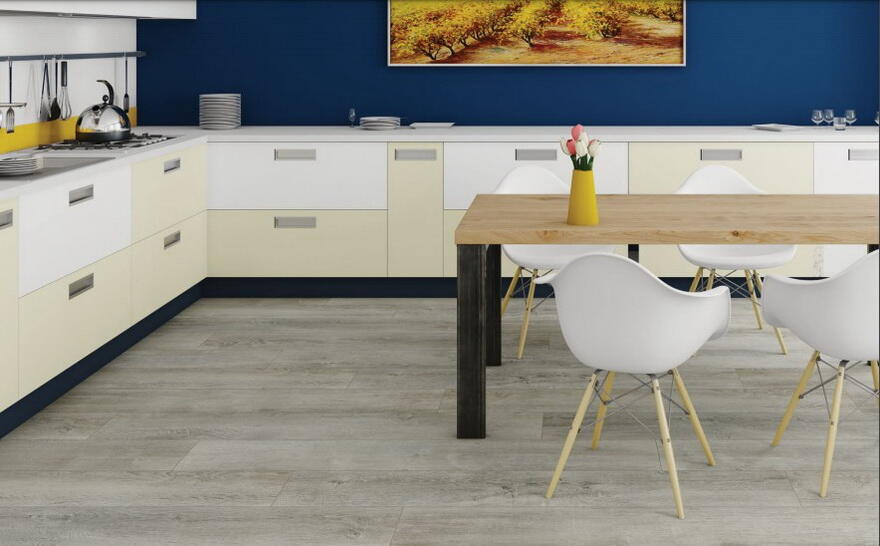
- Planks (under the tree) - visually expand the space.
- Tile (a stone, Concrete) - modern style, easier to hide joints.
- dimensions — large format simplifies installation and creates fewer seams.
Features of installation in the kitchen
- Preparing the base: Screed or leveling mixture required. Let's say an old tile, if it is smooth and strong.
- Acclimatization: The material must lie indoors 24-48 hours before styling.
- temperature conditions: Work is carried out at temperatures from +18°C.
- Gaps near walls: Be sure to leave technological gaps 5-10 mm to compensate for thermal expansion.
- Thresholds and transitions: Use flexible thresholds in doorways.
Comparison with other kitchen coatings
- Tile (granite): More durable, but colder and harsher. Vinyl is warmer and quieter.
- Regular laminate: Vinyl is much more moisture resistant.
- Cork: Vinyl is easier to care for and more resistant to moisture.
- Linoleum: Vinyl is thinner, but is often stronger and has a more modern design.
Care and operation
- Daily care: Wet cleaning with a neutral product.
- Protection: Felt stickers for furniture legs, avoid rubber mats.
- Removing stains: Clean up spilled liquids promptly.
- Recovery: If one plank in the interlocking covering is damaged, it can be replaced without dismantling the entire floor.
Total: Who should use vinyl laminate flooring in the kitchen??
This is the perfect choice, if you appreciate:
- Practicality - not afraid of water and easy to clean.
- Comfort - warm and bouncy underfoot.
- Security - anti-slip properties.
- design - wide selection of textures and colors.
- Durability - service life 10-20 years with proper use.
Recommendation: Choose products from famous brands (Tarkett, Art Vinyl, BerryAlloc, I record), pay attention to the guarantee (usually 10-15 years for household use) and trust styling to professionals to get the perfect result.